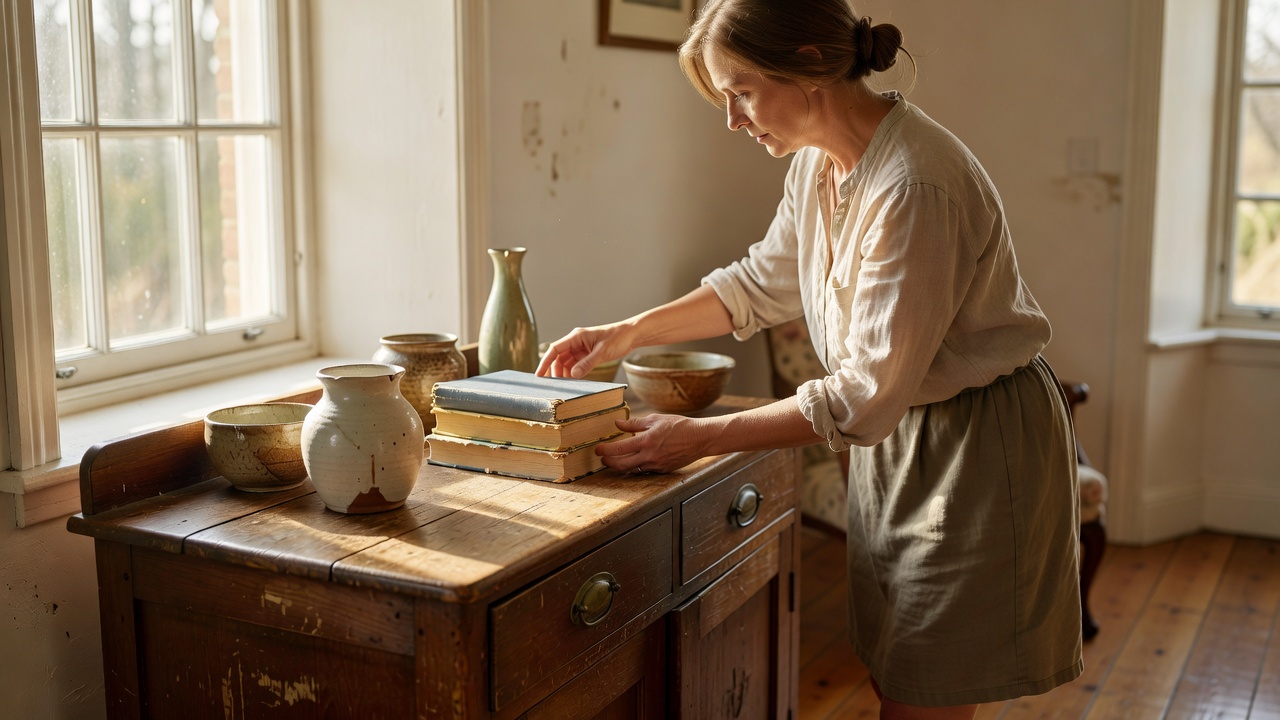
Give the find a job before bringing it home
A beautiful cabinet can still be the wrong cabinet. Before visiting a second-hand shop, write down the dimensions of the available space and what the piece needs to hold. Measure doorways, stairs and tight turns as well. The best bargain is not a bargain if it cannot reach the room or prevents a nearby drawer from opening.
Look around your own home first. A small dining table might become a desk; a sturdy chest might provide hallway storage. Changing a piece's purpose can reveal value you had stopped noticing. Make sure the proposed use is appropriate to its condition and construction, especially where children, heavy loads or frequent movement are involved.
Inspect condition without romanticising damage
Ask permission to open drawers, inspect the back and look underneath. Notice loose joints, missing parts, persistent odours, staining and signs of possible pest activity. Wear to a finish is different from a failing structure. If you cannot confidently understand a problem, seek a qualified assessment or walk away rather than assuming it is an easy repair.
Ask the seller what is known about repairs, materials and provenance, while recognising that second-hand descriptions may be incomplete. Check current recall information for relevant products. Be especially cautious with nursery furniture, upholstered items and electrical fittings, where appearance alone cannot establish safety or compliance with current requirements.
Repair, replace—or leave it alone?
A loose handle on a sound chest may be a modest task. A cracked load-bearing joint is a different matter. Separate cosmetic preferences from functional defects before deciding what to do. Do not sit on an unstable chair to “test it properly,” and do not use a damaged piece until its safety has been assessed.
- Keep the wear when it does no harm.
A rubbed edge or faded patch can be part of the appeal.
- Price the repair before agreeing to buy.
Include professional work, transport and any replacement parts.
- Pause when the materials are unknown.
Old coatings may contain hazardous substances. Avoid sanding or stripping without appropriate assessment.
Valuable or historically significant pieces deserve specialist advice before refinishing. An aggressive makeover can remove original material and alter value. A gentle, material-appropriate clean may be enough; follow informed care guidance rather than applying a fashionable treatment to every surface.
Mix wood tones through repetition
You do not need to stain every piece the same colour. Instead, notice whether the room has mostly warm or cool-looking finishes, then repeat one tone in another location. A dark side table may feel connected to a picture frame or chair legs without requiring an entire matching suite.
Balance visual weight as well as colour. A substantial chest can sit comfortably beside a light, simple chair. If several ornate pieces compete, move one to another room or give them quieter surroundings. Contrast is often what allows an old piece to be appreciated, rather than swallowed by a collection of equally busy neighbours.
Let modern pieces carry some of the work
A contemporary sofa, plain curtains and practical lighting can make vintage furniture easier to live with. There is no obligation to recreate a particular period. Use older pieces where their proportions and storage suit the household, and newer ones where comfort, accessibility or clear safety requirements make them the better choice.
William Morris and the Arts and Crafts movement offer useful context for thinking about materials and everyday objects, but a lived-in room is not a museum installation. You can enjoy a well-made wooden chest beside a basic flat-pack shelf. Their shared job is to serve the room, not to prove a design pedigree.
Count the whole cost
Set a spending limit that includes collection or delivery, cleaning, repair and any suitable anchoring hardware. A low purchase price can conceal expensive upholstery work or difficult transport. Ask about return terms before paying, and keep photographs, measurements and the seller's description where you can find them.
Resist the urgency of “one of a kind” when the piece has no clear place. There will be other useful objects, even if there is not another identical one. Bringing home fewer, better-suited finds leaves you more time and money to care for what you already own.
Allow the room to grow slowly
Use the new-to-you piece before deciding what should go on it. You may find it needs a lamp and nothing else, or that its most useful role is closed storage for everyday clutter. The collected feeling comes from layers of use and care, not from buying a roomful of old things in one weekend.