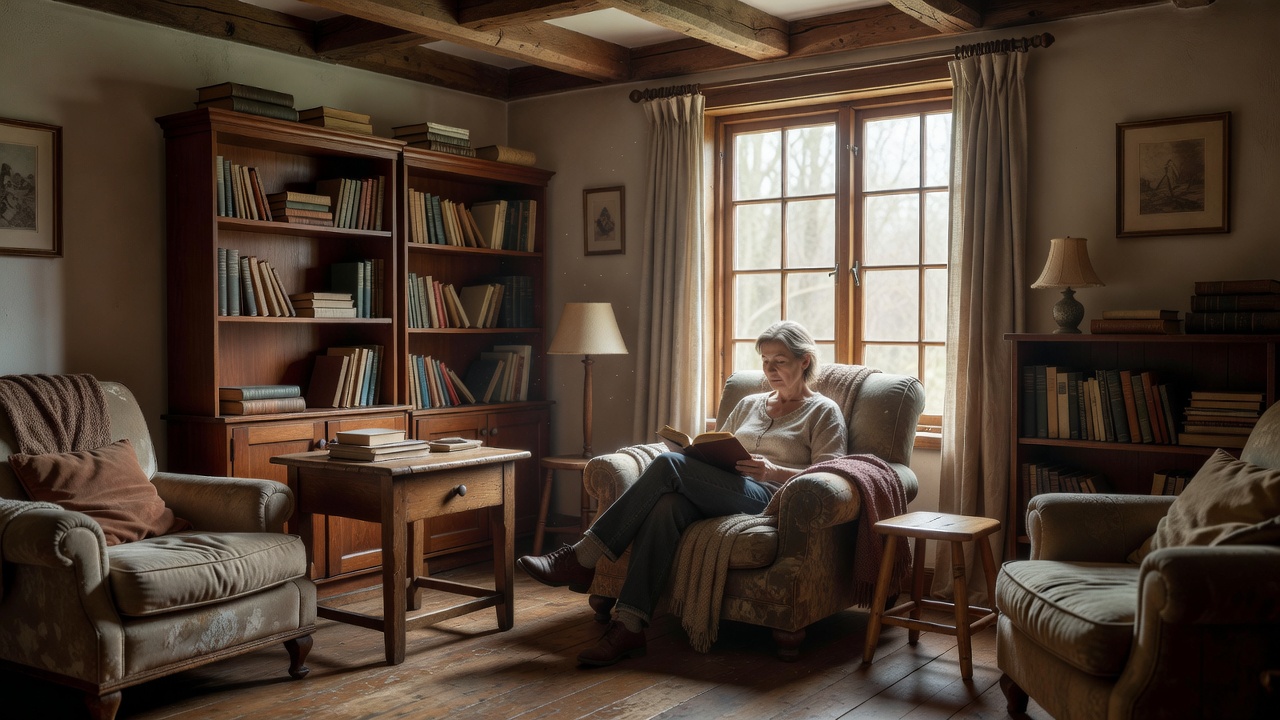
Watch the room before moving it
Spend an ordinary evening noticing where people settle. The chair facing the window may be used more than the expensive sofa. A child may need floor space near the adults. Someone working at the dining table may need a place to put a laptop away. These habits tell you what the room needs to support.
Write down three jobs your living room must do, then identify the one thing that currently makes each job awkward. Keep the list specific: “nowhere for a mug” is more useful than “the room lacks character.” Fixing a small inconvenience often makes the whole space feel more considered, without adding another decorative layer.
Give movement its own space
Trace the journeys from the door to the seating, window, storage and adjoining room. Move a stool or basket if it repeatedly interrupts those journeys. There is no universal measurement that suits every household: check the actual clearance needed by the people, mobility aids, pets and furniture in your home.
Mark a proposed arrangement with removable tape suitable for your floor, or use paper cutouts on a measured sketch. Include door swings and opening drawers. Walk the route with a laundry basket before lifting anything heavy. Keep exits clear, and ask for help rather than dragging a large piece across a delicate floor.
A conversation corner, not a floor plan rule
Not to scale. Adapt to doors, radiators, access requirements and the furniture you own.
Let seats relate to one another
Pushing every piece against a wall can leave an empty centre and make conversation feel distant. If the room allows it, bring one chair inward and turn it slightly toward the sofa. A small table between seats may be more useful than a large coffee table that everyone must negotiate.
In a narrow room, the sensible answer may still be a sofa against the wall. Cottage comfort is not a test of whether furniture “floats.” Work with the shape you have. Keep the best seat comfortable, support a natural view toward other people, and avoid blocking a heat source or an opening window.
Make lighting follow the evening
One bright ceiling light rarely serves every activity well. Use an existing table lamp near the reading seat, then see whether another gentle light is needed across the room. Check the shade, bulb rating and condition of the fitting before changing bulbs. Keep cables away from walking routes and follow the manufacturer's instructions.
A warm-looking bulb can soften cream walls, but packaging labels do not tell the whole story. Try one suitable bulb before replacing several. Shades alter the effect, and a person doing close work may need more light than someone relaxing nearby. Dimmers and fittings must be compatible; ask a qualified electrician about uncertain wiring.
Add softness without filling every gap
Start with textiles you already use. A washable throw can soften a firm chair, while curtains may make a bare window feel more settled. If you add a rug, check that it lies flat, does not interfere with doors and has appropriate slip resistance for the floor. A rug that curls at the edge is not a comfort improvement.
Leave a little empty surface beside the objects you love. A useful tray can gather remote controls; a basket can hold the blankets that otherwise migrate across the sofa. The aim is not to hide every sign of life. It is to make tidying easy enough that the room is ready to be used again.
Live with one change for a while
Try the revised layout through several ordinary evenings before making a purchase. Notice what still bothers you and what quietly stopped being a problem. You may discover that the room needs a small side table rather than a new suite, or simply that a favourite chair belongs somewhere else.
If you do buy, measure the room and the delivery route, check the return terms, and choose for comfort and maintenance as well as appearance. A modest, repairable piece that supports your actual routine is a better foundation than an impressive object that makes the room harder to live in.